

How To Maintain a Hot Tub Without Chemicals?
The honest answer to “how to maintain hot tub without chemicals” is that you can’t, not safely: a hot tub with no sanitizer at all grows germs faster than any filter removes them. What you can do is cut your reliance on harsh chemicals, often by a lot, with the right equipment, weekly habits and draining schedule.
That is good news if you’re tired of five bottles under the cabinet, a chlorine smell that follows you to bed and skin that feels tight after every soak. Most of us lived with that for years. Can natural hot tub chemicals do the job instead? Some help; none work alone.
Key Takeaways:
- A hot tub always needs a sanitizer: chlorine, bromine or biguanide.
- Ozone, UV, minerals and enzymes lower chemical use but don’t replace sanitizer.
- Showering first and keeping the cover on stop most debris reaching the water.
- Rinse filters weekly, deep-clean them monthly, and refill every three to four months.
- Less organic load means fewer harsh chemicals and less of what causes irritation.
Why Does a Hot Tub Still Need Sanitizer?
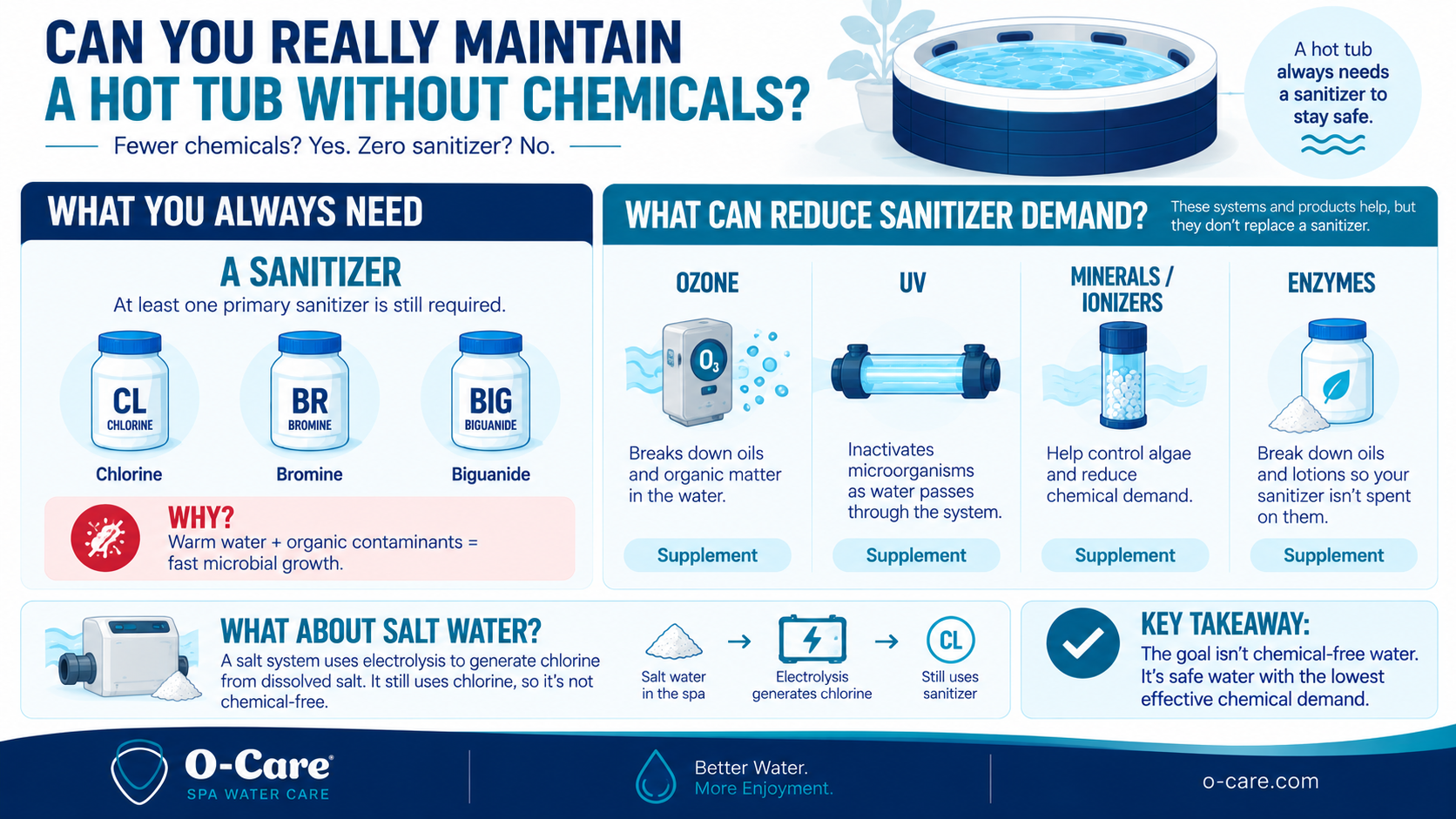
Warm hot tub water is a breeding ground for germs, and it wears chemicals down quickly. The heat that makes soaking pleasant suits bacteria too, and every soak adds body oils, sweat and lotion for them to feed on. Without a sanitizer, contaminants multiply between soaks.
The CDC notes that hot tubs sit in the temperature range where Legionella grows best and speed up the decay of disinfectants. Its hot tub rash guidance traces the rash to Pseudomonas aeruginosa, a germ found in poorly maintained water.
Chlorine and bromine kill bacteria. The closest you can safely get to maintaining a hot tub without chemicals is the smallest dose that keeps the water clean.
Which Eco-Friendly Alternatives Cut Hot Tub Chemicals?
Natural alternatives to hot tub chemicals fall into two clear groups. Bromine, biguanide and chlorine generators are sanitizers: they replace chlorine, not chemicals. Minerals, ozone, UV and enzymes are supplements that cut the sanitizer needed; each still needs a sanitizer.
Buying a natural hot tub sanitizer? Look for an EPA registration number.
Is a Chlorine-Free Hot Tub Safe?
A tub without chlorine can be safe if another sanitizer takes its place. Bromine is the usual swap for chlorine. Biguanide pairs with a peroxide oxidizer and can’t be mixed with chlorine or bromine.
Is a Salt or Mineral System Enough?
A chlorine generator makes chlorine from dissolved salt through electrolysis, more steadily than traditional hot tub chemicals allow. Mineral systems release copper and silver ions that slow algae. Read up on Salt-based systems first. The hot tub salt water conversion kit guide covers the switch.
System
Salt Systems
Mineral Systems
Pros
Steady chlorine; fewer dosing swings
Fewer traditional chemicals required; slows algae
Cons
Still chlorine; the cell needs checking
Metal levels need monitoring
Sanitizer or supplement?
Sanitizer (makes chlorine)
Supplement; needs sanitizer
Do Ozone and UV Replace Sanitizer?
Ozone generators and UV systems work only as water passes through the equipment, not in the spa water you sit in. Ozone is highly effective at breaking down oils and organic matter, and ultraviolet light inactivates microorganisms.
System
Ozone Generators
UV Systems
Pros
Lower chemical use; breaks down organics
Inactivates bacteria and viruses
Cons
No residual; needs good circulation
Treats only water passing the UV light
Sanitizer or supplement?
Supplement; needs sanitizer
Supplement; needs sanitizer
Do Enzymes or Ionizers Replace Chlorine?
Enzymes break down oils and lotions so your chlorine isn’t spent on them. Ionizers work much like mineral systems. Both lower demand.
Treatment
Enzyme Treatments
Ionizers
Pros
Helps eliminate scum lines; extends filter life
Fewer chemicals required
Cons
Needs regular dosing
Metal levels need monitoring
Sanitizer or supplement?
Supplement; needs sanitizer
Supplement; needs sanitizer
What Weekly Habits Help Hot Tub Owners Use Less Sanitizer?
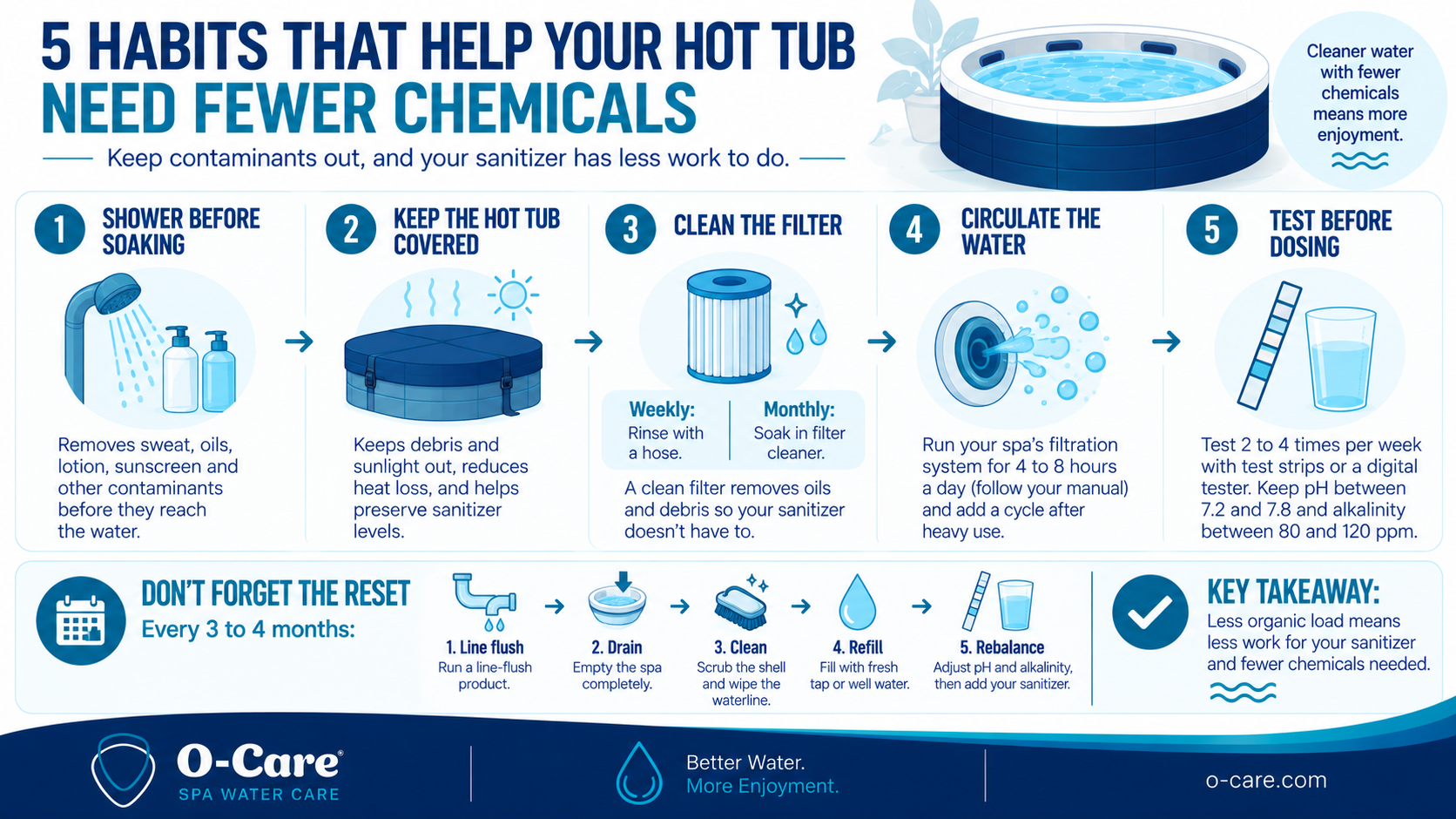
Many hot tub owners reach for more chemicals when the water turns. The more natural way is keeping contaminants out: shower before soaking, keep the hot tub covered, rinse filters weekly and run the pump long enough. Then test first.
1. Shower Before Soaking
Deodorant, sunscreen and body oils are where your chlorine spends most of its effort. A quick rinse keeps those contaminants out of the spa. The CDC lists showering first.
2. Keep the Hot Tub Covered
Keep the hot tub covered whenever nobody is in it. The cover keeps debris out and sunlight off the water, which otherwise burns through chlorine. Holding heat in is easier on the environment too.
3. Rinse Filters Weekly, Deep-Clean Monthly
Rinse the filter with a hose every week and soak it in filter cleaner once a month. A filter that looks clean can still carry a film of oils and organic contaminants. When one comes out of the soak still discolored, it goes in the bin. See how to clean a hot tub filter.
4. Run the Pump Long Enough
Circulation carries chlorine through the whole spa and pushes water through a clean filter. Many hot tubs run 4 to 8 hours of filtration a day; follow your manual and add a cycle after heavy use.
5. Test for Balanced Hot Tub Water
Test two to four times a week with test strips or a digital hot tub tester, and fix pH first. Maintain pH between 7.2 and 7.8, since chlorine works best at proper pH levels.
Check alkalinity levels and water hardness; baking soda raises alkalinity. If pH runs high, add a pH decreaser in small doses and retest after the jets have run.
Maintaining your hot tub balance gets easier once pH holds steady. For what chlorine misses, a non-chlorine shock is an oxidizer, not a sanitizer or a natural product. Our overview of natural options covers other chemicals.
When Does The Ideal Hot Tub Maintenance Call for Draining?
Empty, scrub and refill the spa every three to four months. Biofilm, the slimy layer bacteria build inside the pipes, hides where chlorine struggles to reach, and it is why new water can turn cloudy days after a refill. Fresh water helps reset your water quality.
- Add a line-flush product and run the jets before you empty the tub.
- Scrub the shell and wipe the waterline to keep the hot tub clean.
- Refill, then rebalance pH before adding sanitizer.
See how to drain a hot tub. For a severe case, first fix biofilm. Cloudy between refills? Clean your hot tub’s filter first, then shock.
Green water means algae got ahead of the chlorine: brush the walls, clean the filter and shock, and refill early if it returns. Stains and scale come from minerals in the water. Steady pH slows them, and a soft cloth with a non-abrasive cleaner lifts what’s there.
Does a Low-Chemical Hot Tub Save Money and the Environment?
Usually, over time. UV, ozone, hot tub technology, and mineral equipment costs more upfront, but a tub that needs less chlorine, less shock and fewer refills goes through fewer bottles each season. Eco-friendly hot tub chemicals and natural ones help less than habits do: a good cover alone cuts heat loss, evaporation and the debris your chlorine would otherwise fight.
Fewer chemicals also mean fewer containers to store and less treated water to get rid of, which is better for the environment. Check local rules before you empty the spa onto soil or into a storm sewer, since chlorinated water can harm plants and streams.
Where Does O-Care Fit If You Want Fewer Chemicals?

Regular maintenance limits what gets into the water. O-Care deals with what is already there: its mineral salts break down the organic load and sediment in the hot tub water and on surfaces, and stop new buildup. With less to fight, your sanitizer dose drops by up to 78%.
You still need chlorine or bromine; what changes is how much. Less chemical in the water means less of what causes skin irritation related to hot tub use. The routine is two compounds, once a week.
Fewer Chemicals, Not None
A hot tub without chemicals isn’t safe, and no product changes that. But the chlorine smell and the tight skin after a soak aren’t the fixed price of owning a hot tub either. Pick a supplement that suits your spa, maintain the weekly habits, and refill on schedule.
With regular maintenance, your dose shrinks to what the hot tub water needs, and the cabinet holds fewer bottles. The choice was never chemicals or none; it was how much. That is kinder to both the environment and your evenings. A short hot tub maintenance checklist helps you maintain the routine.
If you’d rather spend less time dosing and more time soaking, see how O-Care Comfort works.
FAQs

Can I Run My Hot Tub Without Chemicals?
Not safely. The pump will run, but bacteria grow between soaks. You can maintain it on far fewer chemicals with a supplement, filter care and a low sanitizer level.
How Long Can You Leave a Hot Tub Without Chemicals?
Don’t soak while the sanitizer reads zero; heat breaks chlorine down fast, so test before every soak. For weeks unused, maintain a low level with the cover on, or empty the spa.
Is a Chemical-Free Hot Tub Safe?
No. Without a sanitizer, germs such as Pseudomonas, the cause of hot tub rash, grow in warm water. A tub can skip chlorine by using bromine or biguanide, but never skip sanitizer.
What Is the Best Natural Hot Tub Treatment?
Usually enzymes, which break down the oils your chlorine would otherwise fight. Pair them with weekly filter rinses, a steady maintenance routine and a low chlorine level.
Is Salt Water Chemical Free?
No. Saltwater systems use electrolysis to make chlorine, so the water is chlorinated. You still test pH and alkalinity.
The honest answer to “how to maintain hot tub without chemicals” is that you can’t, not safely: a hot tub with no sanitizer at all grows germs faster than any filter removes them. What you can do is cut your reliance on harsh chemicals, often by a lot, with the right equipment, weekly habits and draining schedule.
That is good news if you’re tired of five bottles under the cabinet, a chlorine smell that follows you to bed and skin that feels tight after every soak. Most of us lived with that for years. Can natural hot tub chemicals do the job instead? Some help; none work alone.
Key Takeaways:
- A hot tub always needs a sanitizer: chlorine, bromine or biguanide.
- Ozone, UV, minerals and enzymes lower chemical use but don’t replace sanitizer.
- Showering first and keeping the cover on stop most debris reaching the water.
- Rinse filters weekly, deep-clean them monthly, and refill every three to four months.
- Less organic load means fewer harsh chemicals and less of what causes irritation.
Why Does a Hot Tub Still Need Sanitizer?
Warm hot tub water is a breeding ground for germs, and it wears chemicals down quickly. The heat that makes soaking pleasant suits bacteria too, and every soak adds body oils, sweat and lotion for them to feed on. Without a sanitizer, contaminants multiply between soaks.
The CDC notes that hot tubs sit in the temperature range where Legionella grows best and speed up the decay of disinfectants. Its hot tub rash guidance traces the rash to Pseudomonas aeruginosa, a germ found in poorly maintained water.
Chlorine and bromine kill bacteria. The closest you can safely get to maintaining a hot tub without chemicals is the smallest dose that keeps the water clean.
Which Eco-Friendly Alternatives Cut Hot Tub Chemicals?
Natural alternatives to hot tub chemicals fall into two clear groups. Bromine, biguanide and chlorine generators are sanitizers: they replace chlorine, not chemicals. Minerals, ozone, UV and enzymes are supplements that cut the sanitizer needed; each still needs a sanitizer.
Buying a natural hot tub sanitizer? Look for an EPA registration number.
Is a Chlorine-Free Hot Tub Safe?
A tub without chlorine can be safe if another sanitizer takes its place. Bromine is the usual swap for chlorine. Biguanide pairs with a peroxide oxidizer and can’t be mixed with chlorine or bromine.
Is a Salt or Mineral System Enough?
A chlorine generator makes chlorine from dissolved salt through electrolysis, more steadily than traditional hot tub chemicals allow. Mineral systems release copper and silver ions that slow algae. Read up on Salt-based systems first. The hot tub salt water conversion kit guide covers the switch.
| System | Salt Systems | Mineral Systems |
| Pros | Steady chlorine; fewer dosing swings | Fewer traditional chemicals required; slows algae |
| Cons | Still chlorine; the cell needs checking | Metal levels need monitoring |
| Sanitizer or supplement? | Sanitizer (makes chlorine) | Supplement; needs sanitizer |
Do Ozone and UV Replace Sanitizer?
Ozone generators and UV systems work only as water passes through the equipment, not in the spa water you sit in. Ozone is highly effective at breaking down oils and organic matter, and ultraviolet light inactivates microorganisms.
| System | Ozone Generators | UV Systems |
| Pros | Lower chemical use; breaks down organics | Inactivates bacteria and viruses |
| Cons | No residual; needs good circulation | Treats only water passing the UV light |
| Sanitizer or supplement? | Supplement; needs sanitizer | Supplement; needs sanitizer |
Do Enzymes or Ionizers Replace Chlorine?
Enzymes break down oils and lotions so your chlorine isn’t spent on them. Ionizers work much like mineral systems. Both lower demand.
| Treatment | Enzyme Treatments | Ionizers |
| Pros | Helps eliminate scum lines; extends filter life | Fewer chemicals required |
| Cons | Needs regular dosing | Metal levels need monitoring |
| Sanitizer or supplement? | Supplement; needs sanitizer | Supplement; needs sanitizer |
What Weekly Habits Help Hot Tub Owners Use Less Sanitizer?
Many hot tub owners reach for more chemicals when the water turns. The more natural way is keeping contaminants out: shower before soaking, keep the hot tub covered, rinse filters weekly and run the pump long enough. Then test first.
1. Shower Before Soaking
Deodorant, sunscreen and body oils are where your chlorine spends most of its effort. A quick rinse keeps those contaminants out of the spa. The CDC lists showering first.
2. Keep the Hot Tub Covered
Keep the hot tub covered whenever nobody is in it. The cover keeps debris out and sunlight off the water, which otherwise burns through chlorine. Holding heat in is easier on the environment too.
3. Rinse Filters Weekly, Deep-Clean Monthly
Rinse the filter with a hose every week and soak it in filter cleaner once a month. A filter that looks clean can still carry a film of oils and organic contaminants. When one comes out of the soak still discolored, it goes in the bin. See how to clean a hot tub filter.
4. Run the Pump Long Enough
Circulation carries chlorine through the whole spa and pushes water through a clean filter. Many hot tubs run 4 to 8 hours of filtration a day; follow your manual and add a cycle after heavy use.
5. Test for Balanced Hot Tub Water
Test two to four times a week with test strips or a digital hot tub tester, and fix pH first. Maintain pH between 7.2 and 7.8, since chlorine works best at proper pH levels.
Check alkalinity levels and water hardness; baking soda raises alkalinity. If pH runs high, add a pH decreaser in small doses and retest after the jets have run.
Maintaining your hot tub balance gets easier once pH holds steady. For what chlorine misses, a non-chlorine shock is an oxidizer, not a sanitizer or a natural product. Our overview of natural options covers other chemicals.
When Does The Ideal Hot Tub Maintenance Call for Draining?
Empty, scrub and refill the spa every three to four months. Biofilm, the slimy layer bacteria build inside the pipes, hides where chlorine struggles to reach, and it is why new water can turn cloudy days after a refill. Fresh water helps reset your water quality.
- Add a line-flush product and run the jets before you empty the tub.
- Scrub the shell and wipe the waterline to keep the hot tub clean.
- Refill, then rebalance pH before adding sanitizer.
See how to drain a hot tub. For a severe case, first fix biofilm. Cloudy between refills? Clean your hot tub’s filter first, then shock.
Green water means algae got ahead of the chlorine: brush the walls, clean the filter and shock, and refill early if it returns. Stains and scale come from minerals in the water. Steady pH slows them, and a soft cloth with a non-abrasive cleaner lifts what’s there.
Does a Low-Chemical Hot Tub Save Money and the Environment?
Usually, over time. UV, ozone, hot tub technology, and mineral equipment costs more upfront, but a tub that needs less chlorine, less shock and fewer refills goes through fewer bottles each season. Eco-friendly hot tub chemicals and natural ones help less than habits do: a good cover alone cuts heat loss, evaporation and the debris your chlorine would otherwise fight.
Fewer chemicals also mean fewer containers to store and less treated water to get rid of, which is better for the environment. Check local rules before you empty the spa onto soil or into a storm sewer, since chlorinated water can harm plants and streams.
Where Does O-Care Fit If You Want Fewer Chemicals?
Regular maintenance limits what gets into the water. O-Care deals with what is already there: its mineral salts break down the organic load and sediment in the hot tub water and on surfaces, and stop new buildup. With less to fight, your sanitizer dose drops by up to 78%.
You still need chlorine or bromine; what changes is how much. Less chemical in the water means less of what causes skin irritation related to hot tub use. The routine is two compounds, once a week.
Fewer Chemicals, Not None
A hot tub without chemicals isn’t safe, and no product changes that. But the chlorine smell and the tight skin after a soak aren’t the fixed price of owning a hot tub either. Pick a supplement that suits your spa, maintain the weekly habits, and refill on schedule.
With regular maintenance, your dose shrinks to what the hot tub water needs, and the cabinet holds fewer bottles. The choice was never chemicals or none; it was how much. That is kinder to both the environment and your evenings. A short hot tub maintenance checklist helps you maintain the routine.
If you’d rather spend less time dosing and more time soaking, see how O-Care Comfort works.
FAQs
Can I Run My Hot Tub Without Chemicals?
Not safely. The pump will run, but bacteria grow between soaks. You can maintain it on far fewer chemicals with a supplement, filter care and a low sanitizer level.
How Long Can You Leave a Hot Tub Without Chemicals?
Don’t soak while the sanitizer reads zero; heat breaks chlorine down fast, so test before every soak. For weeks unused, maintain a low level with the cover on, or empty the spa.
Is a Chemical-Free Hot Tub Safe?
No. Without a sanitizer, germs such as Pseudomonas, the cause of hot tub rash, grow in warm water. A tub can skip chlorine by using bromine or biguanide, but never skip sanitizer.
What Is the Best Natural Hot Tub Treatment?
Usually enzymes, which break down the oils your chlorine would otherwise fight. Pair them with weekly filter rinses, a steady maintenance routine and a low chlorine level.
Is Salt Water Chemical Free?
No. Saltwater systems use electrolysis to make chlorine, so the water is chlorinated. You still test pH and alkalinity.


